
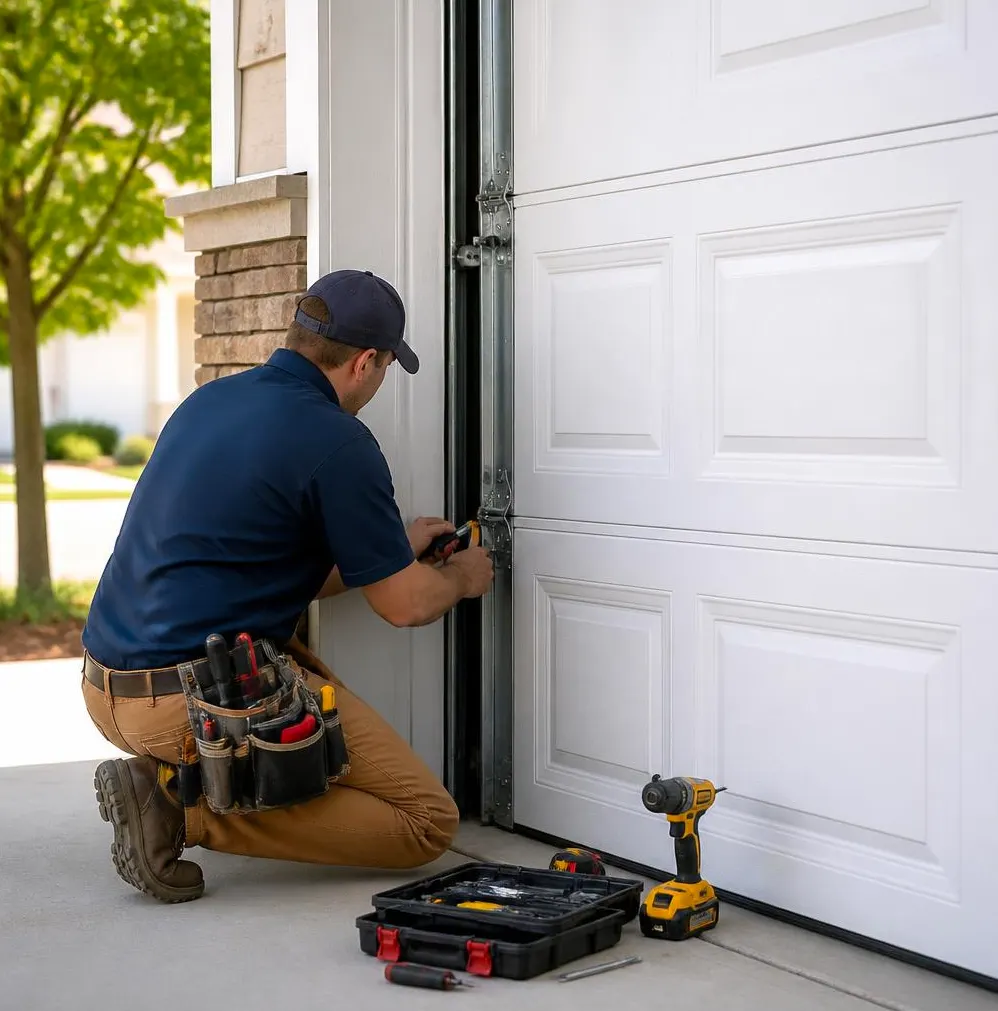
You're pulling into the driveway, the garage door starts to rise, and there it is again: that metallic grind or squeal coming from somewhere up near the tracks. Maybe your spouse has started closing the door from inside the car instead of waiting in the garage while it groans through its cycle. The sound isn't just annoying — it's friction, and friction wears down hardware that's expensive to replace. The fix is often simpler than people expect: the door just needs to be lubricated correctly, with the right products, in the right places.
Humidity swings hard here. Summers are sticky and thick with moisture, winters bring ice and salt-laced slush tracked in from the driveway, and heavy rain is a near-constant guest. That combination strips factory lubricant off hardware faster than in drier climates, and it's why a once-a-year oiling often isn't enough.
Tools You'll Need
- A silicone-based garage door lubricant spray (not WD-40, not motor oil)
- A clean rag or microfiber cloth
- A small stiff brush (an old toothbrush works)
- A step stool or sturdy ladder
- Work gloves
Step-by-Step: Lubricating Your Garage Door
- Disconnect the opener and close the door manually. Pull the red release cord so you can move the door by hand without the motor engaging mid-task. Working on a closed, disengaged door is safer and gives you access to every section of track.
- Wipe down the tracks and hardware first. Before adding any lubricant, run a dry rag along the tracks, hinges, and rollers to remove dust, pollen, and the gritty residue that road salt and rain leave behind. Lubricating over grime just creates a sticky paste that attracts more dirt.
- Spray the hinges. Each hinge connecting the door panels should get a light coat of silicone lubricant. Work the door up and down a few inches by hand so the product reaches into the pivot point, not just the surface.
- Lubricate the rollers, but only at the bearings. If you have steel rollers with exposed bearings, a quick spray at the stem where it meets the wheel is enough. If you have nylon rollers, skip the wheel itself — focus only on the bearing — since over-oiling nylon doesn't help and can attract grit.
- Coat the torsion spring lightly. A thin film of silicone lubricant on the spring coils reduces friction and rust, which matters a lot given how much moisture sits in this region's air. Don't drench it — a light misting is enough, wiped so it doesn't drip onto the floor.
- Apply lubricant to the opener's chain or screw drive. If you have a chain-drive opener, a small amount of lubricant along the chain reduces the rattle. For screw-drive openers, use the specific grease recommended by the opener manufacturer — not the same silicone spray you used on the hinges.
- Skip the tracks themselves. This trips people up constantly: the tracks should stay clean and dry, never lubricated. Oil or grease on the tracks collects dust and actually makes the rollers slip rather than glide.
- Reconnect the opener and run the door through a few full cycles. Watch and listen. The grinding should be noticeably quieter. If you still hear a specific clunk or squeal from one spot, that's useful information to describe to a technician if it keeps happening.
Products to Avoid
WD-40 is the most common mistake homeowners make. It's a water displacer and light solvent, not a lubricant — it evaporates quickly and can actually dry out components, leaving them squeakier within days. Motor oil, cooking oil, and general-purpose grease are also poor choices; they're too thick, attract dirt, and gum up in cold weather, which is exactly the wrong trait for a door that already fights stiffness on icy mornings.
What's Fine for Homeowners vs. What Needs a Technician
Wiping down tracks, oiling hinges and roller bearings, and lightly coating a chain-drive opener are all reasonable DIY tasks on a ladder with basic tools. Where it crosses into technician territory: if you notice the torsion spring is visibly stretched, rusted through, or has a gap in one of the coils, that's not a lubrication fix — that's a spring nearing failure, and torsion springs are under enough tension to cause serious injury if handled without the right equipment. Likewise, if lubrication doesn't quiet things down and you're hearing a grinding noise from the opener's gears themselves, or the door is lubricated but still sticking, jumping, or reversing unexpectedly, that points to a mechanical issue lubricant won't solve.
When to Call Alexandria Garage Door Solutions
If you've gone through the lubrication routine and the door is still noisy, slow, or uneven, it's worth having a technician take a look before small friction turns into a bigger repair. Our Preventive Maintenance visits cover a full hardware inspection, spring tension check, and proper lubrication of every moving part, done with the right products for this area's humidity and winter salt exposure. If something's already worn past the point of oiling — a cracked roller, a sagging spring, or opener gears grinding themselves down — our Garage Door Repair service addresses the actual mechanical problem instead of just quieting it temporarily.
If your garage door is grinding, squealing, or sticking and a proper lubrication job hasn't solved it, call Alexandria Garage Door Solutions. We serve Alexandria, Springfield, Kingstowne, Annandale, Fairfax, Burke, Lorton, and Mount Vernon, and we'll tell you honestly whether it's a quick fix or something more.