
Your Garage Door Shouldn't Wake the Neighbors
You press the button, and instead of a smooth, quiet operation, your garage door announces itself to the entire block. Maybe it's a grinding sound that makes you wince. Maybe it's a rhythmic banging that shakes the walls. Or maybe it's a high-pitched squeal that sends the dog running.
Whatever the noise, here's the thing most homeowners in Alexandria don't realize: a noisy garage door isn't just annoying — it's a warning. Those sounds are your door's way of telling you that something is wearing out, misaligned, or about to fail.
The good news? Most garage door noises have identifiable causes, and catching them early can save you from expensive repairs or a door that stops working altogether. Let's break down the most common sounds and what they actually mean.
Grinding or Scraping Sounds
A grinding noise when your garage door opens or closes is one of the most common complaints we hear from homeowners across Alexandria and Fairfax. This sound usually points to one of a few issues:
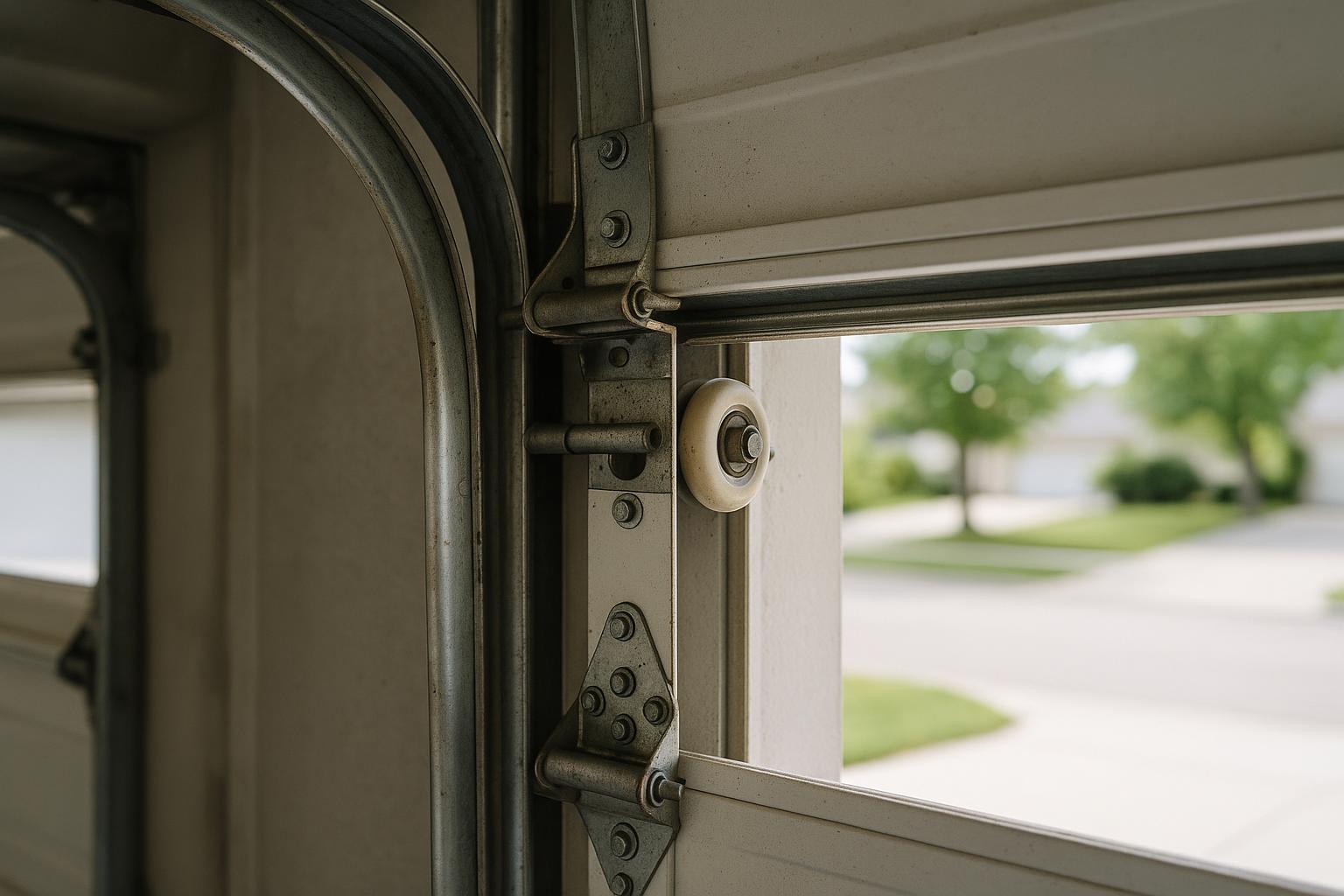
- Worn rollers: Metal rollers wear down over time and can start grinding against the track. Nylon rollers are quieter and last longer, and swapping them out is one of the easiest upgrades you can make.
- Misaligned tracks: If the tracks that guide your door have shifted even slightly, the door can scrape against them as it moves. This creates friction, noise, and uneven wear on the entire system.
- Opener gear issues: If the grinding seems to come from the ceiling-mounted opener unit rather than the door itself, the internal gears may be stripped or wearing out. This is especially common in older chain-drive openers.
Ignoring a grinding sound won't make it go away. In most cases, the problem gets progressively worse until something breaks or the door gets stuck mid-cycle.
Squealing or Screeching
A high-pitched squeal is hard to ignore — and you shouldn't try to. This sound typically means metal is rubbing against metal without adequate lubrication. The most common culprits include:
- Dry hinges and rollers: Every moving part on your garage door needs periodic lubrication. When hinges, rollers, and bearings dry out, they create friction that produces that unmistakable screech.
- Torsion spring coils binding: The torsion springs above your door wind and unwind with every cycle. Without proper lubrication, the coils can bind against each other and produce a squealing or creaking sound.
- Worn bearing plates: The bearing plates at the top of your door support the torsion spring shaft. When these wear out, they can create a persistent squealing noise during operation.
In many cases, a proper lubrication service can eliminate squealing entirely. It's one of the simplest and most cost-effective maintenance tasks, yet most homeowners in the Alexandria area never do it — or use the wrong products. WD-40, for example, is not a lubricant and can actually make things worse. A silicone-based or lithium-based garage door lubricant is what you need.
Rattling and Vibrating
A rattling garage door often sounds worse than it is — but that doesn't mean you should ignore it. Common causes include:
- Loose hardware: Your garage door cycles up and down over a thousand times a year. That constant movement vibrates nuts, bolts, and brackets loose over time. A simple tightening of the hardware can often solve the problem.
- Loose chain or belt: If your opener uses a chain drive, a loose chain will slap and rattle during operation. Belt-drive openers can develop similar issues if the belt stretches or loosens.
- Unsecured opener mounting: If the opener unit itself isn't firmly secured to the ceiling, the vibration from operation can cause the entire assembly to rattle.
Rattling is often the easiest noise to fix, but it can also mask more serious problems. Loose hardware can lead to misalignment, which puts stress on other components and accelerates wear.
Banging or Popping
A loud bang or pop during operation is the noise that worries homeowners the most — and for good reason. These sounds can indicate:
- Panel flexing: If a garage door panel is damaged or weakened, it can flex and pop under the tension of the springs and cables. This is more common in older doors or doors that have taken an impact.
- Snapping cables: A frayed or worn cable can snap during operation, producing a loud bang. This is a serious safety issue that requires immediate professional attention.
- Spring tension issues: Springs that are improperly adjusted or nearing the end of their lifespan can produce popping sounds as they struggle under load.
If you hear a sudden, loud bang from your garage, do not attempt to operate the door again until a technician has inspected it. A broken spring or cable under tension is dangerous and should only be handled by a trained professional.
When Noise Means It's Time for an Upgrade
Sometimes, a noisy garage door isn't broken — it's just old. If your door is 15 to 20 years old and has always been loud, the noise may be a combination of aging components, outdated opener technology, and general wear across the entire system.
Modern garage doors and openers are significantly quieter than models from even a decade ago. Belt-drive openers, insulated steel panels, and nylon rollers can transform a garage door from the loudest thing on your street to something you barely notice. For homeowners in neighborhoods across Springfield, Kingstowne, and Burke where houses sit close together, a quieter door isn't just a comfort upgrade — it's a courtesy to your neighbors.
A Quick Noise Troubleshooting Checklist
Before you call for service, here are a few safe things you can check on your own:
- Listen carefully — try to identify where the noise is coming from. Is it the door panels, the tracks, the springs above the door, or the opener unit on the ceiling?
- Look for obvious issues — check for loose bolts, a sagging chain, or rollers that look worn or cracked.
- Apply garage door lubricant — spray the hinges, rollers, springs, and bearing plates with a proper garage door lubricant. Avoid WD-40 and general-purpose sprays.
- Check the tracks — look for dents, debris, or sections where the track appears bent or misaligned.
- Note when the noise occurs — does it happen when the door is opening, closing, or both? Does it happen at a specific point in the cycle? This information helps a technician diagnose the problem faster.
Don't Wait Until the Noise Becomes a Breakdown
Every garage door noise has a cause, and most of those causes get worse over time. What starts as a minor squeak can turn into a seized roller. A small rattle can become a misaligned track. A faint pop can become a snapped cable.
At Alexandria Garage Door Solutions, we help homeowners throughout Alexandria and the surrounding communities diagnose and fix noisy garage doors every day. Whether it's a simple lubrication service, a roller replacement, or a full system upgrade, we'll tell you exactly what's going on and give you honest options — no upselling, no pressure.
If your garage door is making a sound it shouldn't, don't just turn up the car radio and hope for the best. Give us a call and let's figure out what your door is trying to tell you.