
What a Jammed Release Cord Costs You This Winter
Skip understanding this cord for another season and here's what tends to happen: a door gets stuck halfway open during an ice storm, someone yanks the release without thinking, and the door comes crashing down under its own weight because the springs were already compromised. Or the opposite happens — someone pulls the cord to "fix" a door that won't open, only to find they've now disconnected the one thing keeping a broken spring door from slamming onto a car, a pet, or a foot. Either way, a five-minute mistake turns into a service call, a damaged vehicle, or worse.
What the Emergency Release Cord Actually Does
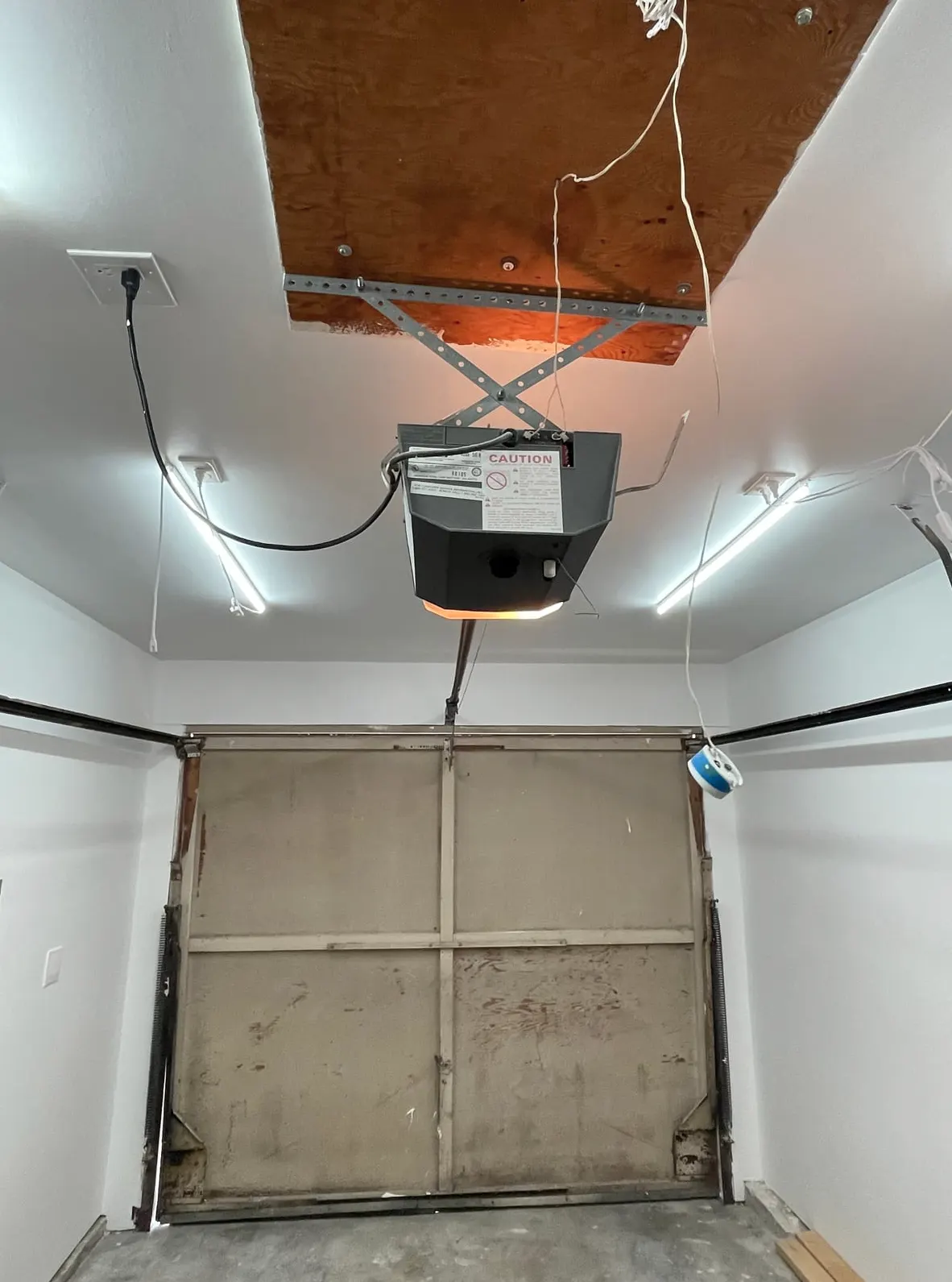
The red cord hanging from your garage door opener's trolley is a manual disconnect. Pull it, and the door separates from the opener's chain or belt drive, letting you move the door by hand. It exists for one real reason: so you're not locked in or out during a power outage, an opener failure, or a stuck sensor. It's a convenience feature, not a repair tool.
When Pulling It Actually Helps
- Power is out and you need to get a car in or out before a storm hits.
- The opener has failed (burnt motor, stripped gear) but the door itself moves freely by hand.
- You're testing whether the problem is the opener or the door — disconnect, try moving the door manually, and see if it's balanced and moves smoothly.
When Pulling It Makes Things Worse
- A spring has already broken. Torsion and extension springs are what counterbalance the door's weight, not the opener. If a spring has snapped and you pull the release, you remove the last bit of control the opener's chain was providing. A standard residential door can weigh well over 100 pounds, and it will drop fast.
- The door is stuck partway open or closed due to ice or a bent track. In Alexandria's icy winters, tracks can stiffen or a bottom panel can freeze to the slab. Pulling the cord doesn't fix a frozen or misaligned track — it just means the door now has nothing holding it in place if it suddenly breaks free.
- You hear a loud bang before the door stopped working. That bang is very likely a spring snapping. Treat the door as unsafe to move by hand until a technician inspects it.
- Kids or pets are nearby. A disconnected door on a damaged track or broken spring can fall with no warning and no resistance.
The Specific Actions That Prevent a Bad Outcome
- Before you pull the cord, look at the springs. Torsion springs sit on a shaft above the door; a visible gap in the coil means it's broken. Don't pull the release if you see this — call for a spring replacement instead.
- If you pull it for a power outage, support the door while it's open. Use a clamp or locking pliers on the track just below the bottom roller on both sides so the door can't slide down the tracks while disconnected.
- Never leave the door disconnected overnight. Reconnect the opener as soon as power or function is restored, especially before heavy rain or an overnight freeze, so the door seals properly and isn't vulnerable to wind.
- Test the release cord twice a year as part of basic maintenance, so you're not learning how it works for the first time during an emergency.
When to Call Alexandria Garage Door Solutions
If you've pulled the cord and the door won't move smoothly by hand, feels unusually heavy, or dropped faster than expected, stop and call us before touching it again. This is almost always a spring problem, and our spring replacement service is built around doing that safely — we match the spring size and wind tension correctly, because a mismatched spring is its own hazard. We also handle opener repair and replacement when the issue turns out to be electrical rather than mechanical, and general garage door repair when tracks or rollers are the real culprit.
If your garage door in Alexandria, Springfield, Kingstowne, or anywhere nearby is stuck, disconnected, or acting unsafe, call Alexandria Garage Door Solutions. We'll diagnose it honestly and get it working right.