
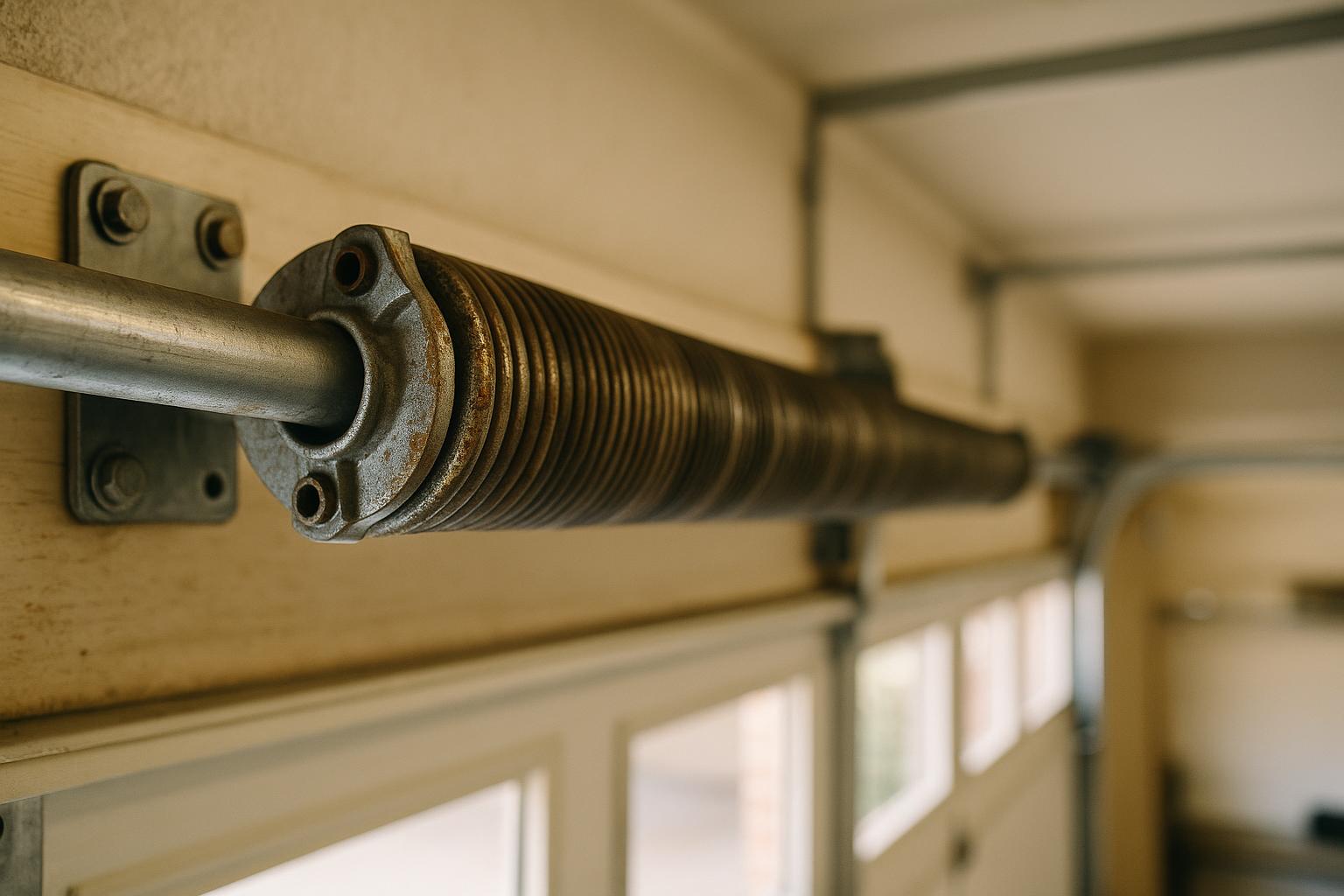
Your Garage Door Springs Are Trying to Tell You Something
If you've ever had a garage door spring snap, you know it's not subtle. The loud bang, the door that suddenly won't budge, the scramble to figure out what just happened — it's stressful, inconvenient, and sometimes even dangerous. But here's the thing most homeowners in Alexandria don't realize: garage door springs almost always show warning signs before they fail completely.
Knowing what to look for can save you from getting stuck in your driveway on a busy morning, prevent potential safety hazards, and give you time to schedule a repair on your terms instead of dealing with an emergency.
How Garage Door Springs Work (And Why They Wear Out)
Your garage door is the largest moving part of your home, and it's heavier than most people think — typically between 150 and 250 pounds for a standard residential door. The springs do the heavy lifting, literally. They counterbalance the weight of the door so your opener doesn't have to muscle it up and down on its own.
There are two main types of springs used in residential garage doors:
- Torsion springs — mounted on a metal shaft above the door opening. These are the most common type in Alexandria homes and are generally considered safer and longer-lasting.
- Extension springs — mounted along the horizontal tracks on either side of the door. These are found in older installations and stretch to store energy.
Both types are rated for a specific number of cycles, with one cycle being a single open-and-close operation. A standard spring is rated for about 10,000 cycles. If your household opens and closes the garage door four times a day, that's roughly seven years of life. Higher-cycle springs can last significantly longer, but no spring lasts forever.
7 Warning Signs Your Springs Are Failing
1. The Door Feels Heavier Than Usual
Try this simple test: disconnect your garage door opener by pulling the emergency release cord, then manually lift the door. A properly balanced door with healthy springs should feel relatively light and stay open about three or four feet off the ground. If the door feels noticeably heavy or slams down the moment you let go, your springs are losing tension and nearing the end of their life.
2. The Door Opens Unevenly or Crooked
If your garage door tilts to one side as it opens or closes, one spring may be weaker than the other. This is especially common in two-spring setups where one spring wears out faster. An uneven door puts extra stress on your tracks, cables, and opener, which can lead to more expensive problems down the road.
3. You Hear Squeaking, Grinding, or Popping Sounds
Some noise during operation is normal, but new or worsening sounds are worth paying attention to. Squeaking or grinding can indicate that the spring coils are rubbing against each other due to wear. A loud popping sound during operation could mean a spring is on the verge of snapping.
4. Visible Gaps in the Spring Coils
Take a look at your torsion spring above the door. A healthy spring has tightly wound coils with uniform spacing. If you notice a visible gap — a section where the coils have separated — the spring has already partially failed. This is one of the clearest visual indicators, and it means replacement should happen soon.
5. The Door Jerks or Hesitates During Operation
A garage door should move smoothly along its tracks. If you notice jerky movements, hesitation at certain points, or the door struggling partway through its travel, worn springs could be the cause. The springs may no longer be providing consistent counterbalance force throughout the full range of motion.
6. Your Opener Is Straining
When springs weaken, your garage door opener has to work harder to compensate. You might notice the motor running louder, the door opening more slowly, or the opener stopping mid-cycle. If your opener seems to be struggling, don't assume the opener itself is the problem — failing springs are often the real culprit.
7. Rust or Corrosion on the Springs
Alexandria's humid climate, especially during the summer months, can accelerate rust formation on metal components. Rust weakens the spring wire and increases friction between coils, which shortens the spring's lifespan. If your springs show significant rust or corrosion, they're deteriorating faster than normal.
Why You Should Never Replace Garage Door Springs Yourself
We understand the DIY impulse — plenty of homeowners in the Alexandria area are handy and capable. But garage door springs are under extreme tension, and working with them requires specialized tools, training, and experience. A torsion spring that releases unexpectedly can cause serious injury or even death.
Every year, thousands of people across the country are injured attempting DIY spring repairs. This is one job where calling a professional isn't just the easier option — it's the safe one.
A qualified technician can also evaluate whether your springs are the right size and type for your door, check related components like cables and drums for wear, and ensure everything is properly balanced after installation.
What to Expect During a Spring Replacement
If you've noticed any of the warning signs above, here's what a typical spring replacement looks like when you call a professional:
- Inspection — The technician examines your springs, cables, drums, and overall door balance to confirm the diagnosis and check for additional issues.
- Spring selection — The right replacement spring is selected based on your door's weight, height, and track configuration. This isn't one-size-fits-all.
- Safe removal and installation — The old springs are safely unwound and removed, and new springs are installed and precisely calibrated.
- Balance testing — The door is tested to ensure it opens, closes, and holds position correctly without the opener engaged.
- Full system check — A good technician will also lubricate moving parts, inspect the opener, and test the safety reversal system while they're there.
The entire process typically takes about an hour for a standard residential door. Most professionals recommend replacing both springs at the same time, even if only one has failed, because the second spring is usually close behind.
How to Make Your Springs Last Longer
While you can't prevent springs from eventually wearing out, you can extend their lifespan with a few simple practices:
- Lubricate your springs twice a year with a silicone-based garage door lubricant. This reduces friction and helps prevent rust.
- Schedule annual maintenance so a technician can catch early signs of wear and keep your entire system in good shape.
- Consider high-cycle springs when it's time for replacement. They cost a bit more upfront but can last 25,000 to 50,000 cycles.
- Minimize unnecessary cycles by keeping a house key handy instead of always using the garage door as your primary entry point.
Don't Wait for the Snap
A broken garage door spring is more than an inconvenience — it can leave your car trapped, compromise your home's security, and create a genuine safety risk. If you've noticed any of the warning signs we've covered, the smartest move is to get ahead of the problem.
At Alexandria Garage Door Solutions, we help homeowners throughout Alexandria, Springfield, Kingstowne, and the surrounding communities with honest assessments and reliable spring replacements. We'll tell you exactly what's going on, what your options are, and get your door working safely — no surprises, no upsells.
If your garage door springs are showing their age, give us a call before they give out completely.