
Why Cold Weather Wreaks Havoc on Garage Doors
You're running late on a frigid January morning in Alexandria, you press the button on your garage door opener, and nothing happens. Or worse, the motor groans, the door lifts an inch, and then stops. Cold weather garage door problems are more common than most homeowners realize, and they tend to strike at the worst possible moment.
While Northern Virginia doesn't see the extreme winters of the upper Midwest, our temperatures regularly dip below freezing from December through February. That's more than enough to cause a range of mechanical and electrical issues with your garage door system. The good news is that most cold weather problems are preventable — and many are fixable without a full replacement.
Common Reasons Your Garage Door Won't Open When It's Cold
1. The Weatherstripping Is Frozen to the Ground
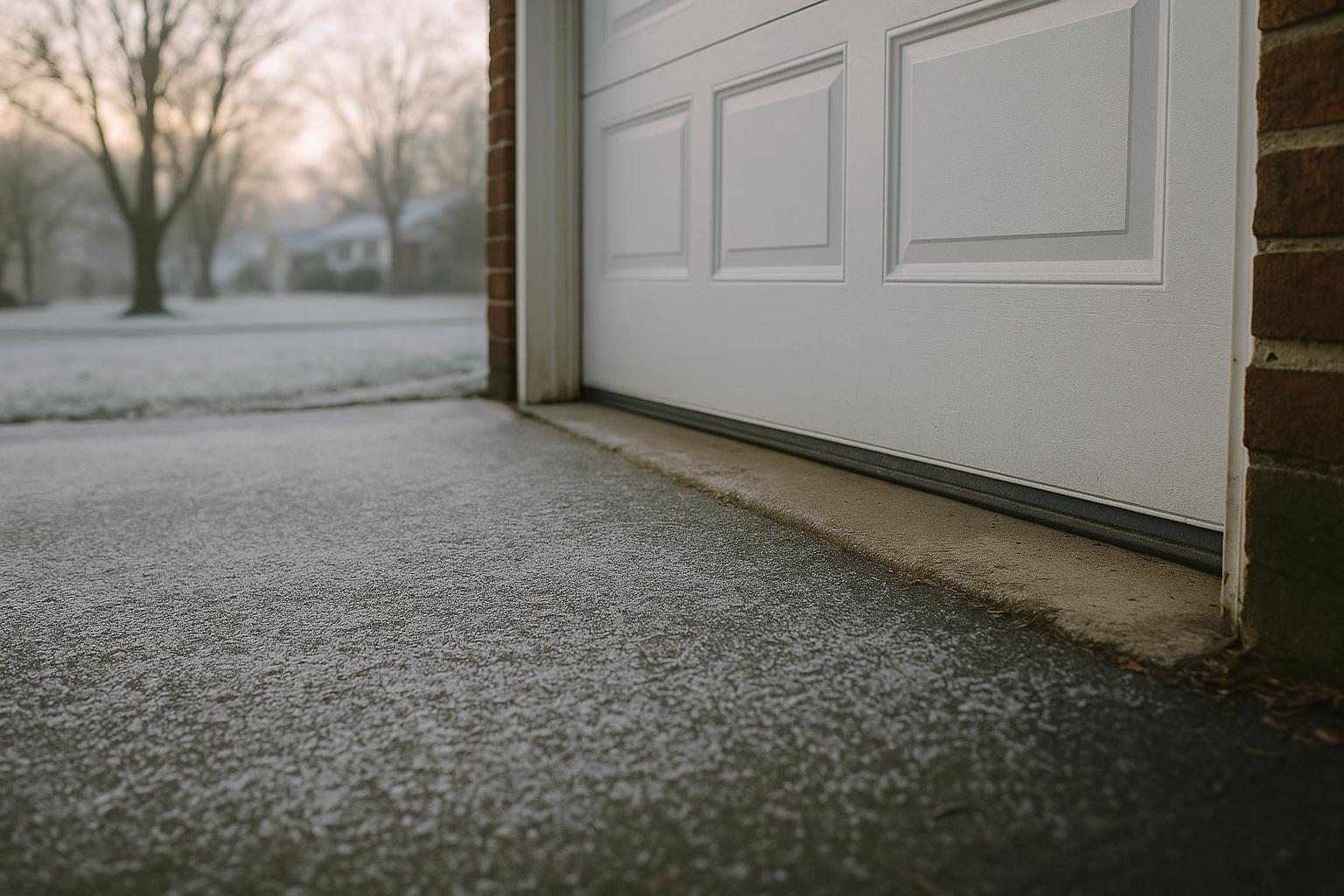
This is the most frequent culprit. The rubber weatherstrip along the bottom of your garage door creates a seal against the concrete floor to keep out drafts, rain, and pests. When moisture collects along that seal and temperatures drop overnight, the weatherstrip can freeze directly to the ground.
When you try to open the door, the opener strains against the frozen seal. In many cases, the opener's safety features will detect the resistance and stop the motor to prevent damage. In other cases, the weatherstrip can tear away from the door entirely.
What to do: Never force the door open. Instead, use a heat gun or hair dryer along the bottom edge to gently melt the ice. You can also carefully pour warm (not boiling) water along the seal. To prevent this from happening again, apply a silicone-based lubricant to the bottom weatherstrip before the next cold snap. Avoid petroleum-based products, which can degrade the rubber over time.
2. Metal Components Have Contracted
Garage doors rely on metal tracks, springs, hinges, and rollers. When temperatures drop, metal contracts slightly. This contraction can cause tracks to become misaligned, rollers to bind, and moving parts to stiffen. The result is a door that moves sluggishly, makes unusual noises, or refuses to open altogether.
What to do: Inspect the tracks for visible gaps or shifts. Lubricate all moving metal parts — including hinges, rollers, and the spring system — with a garage door-specific lubricant. If the tracks appear bent or significantly misaligned, call a professional rather than trying to adjust them yourself.
3. The Garage Door Springs Have Lost Tension or Broken
Torsion and extension springs are under enormous tension, and cold weather makes them more brittle. A spring that was already nearing the end of its lifespan may snap when the temperature drops. If you hear a loud bang from your garage and the door suddenly won't open, a broken spring is the most likely explanation.
What to do: Do not attempt to open the door manually or repair the springs yourself. Garage door springs are under extreme tension and can cause serious injury. This is a job for a trained technician. If you're in Alexandria or the surrounding areas like Springfield, Burke, or Annandale, we can typically get to you the same day for emergency spring replacement.
4. The Opener's Battery or Motor Is Struggling
If your garage is unheated — and most are — the opener motor and its battery backup can be affected by cold. Batteries lose capacity in low temperatures, which means your backup battery may not have enough power to operate the door during an outage. Even the main motor can run more slowly or struggle to generate enough force to lift a cold, stiff door.
What to do: Check that the opener is plugged in and receiving power. If you have a battery backup unit, test it and replace the battery if it's more than two years old. If the motor runs but can't lift the door, the issue may be with the springs rather than the opener itself.
5. Thickened Lubricant on Moving Parts
Standard grease and some lubricants thicken or harden in cold temperatures. When the lubricant on your rollers, tracks, or spring system becomes viscous, it creates friction instead of reducing it. This puts extra strain on your opener and can make the door move unevenly.
What to do: Clean off old, thickened grease and reapply a lithium-based or silicone-based lubricant designed for cold weather use. These products maintain their consistency across a wider temperature range and won't gum up when the mercury drops.
How to Winterize Your Garage Door Before the Cold Hits
Prevention is always easier and cheaper than emergency repairs. Here's a straightforward winterization checklist for Alexandria homeowners:
- Inspect and replace worn weatherstripping — Check the bottom seal and the weatherstripping around the door frame. Replace any sections that are cracked, torn, or compressed flat.
- Lubricate all moving parts — Apply cold-rated lubricant to springs, hinges, rollers, and tracks. Do this at least once before winter and again in mid-January.
- Test the door balance — Disconnect the opener and manually lift the door halfway. If it doesn't stay in place, the springs may need adjustment. Call a technician for this step.
- Check the opener's force settings — Some openers allow you to adjust the force the motor uses. In winter, the door may need slightly more force to operate smoothly. Consult your owner's manual or have a professional adjust it.
- Insulate your garage door — If your garage door isn't insulated, adding an insulation kit can help moderate the temperature inside the garage, reducing the severity of cold-related problems. It also helps with energy efficiency if your garage shares a wall with your home.
- Clear debris from the tracks — Leaves, dirt, and small stones can accumulate in the tracks during fall. Clean them out before winter so the door rolls smoothly.
When to Call a Professional
Some cold weather issues are simple DIY fixes — applying lubricant, melting a frozen seal, or replacing a battery. But others require professional attention. You should call a garage door technician if:
- A spring has broken or appears damaged
- The door is visibly off-track or crooked
- The opener motor runs but the door doesn't move
- You hear grinding, scraping, or popping sounds during operation
- The door falls too quickly when closing
These symptoms can indicate problems that are dangerous to address without proper tools and training. At Alexandria Garage Door Solutions, we handle cold weather service calls throughout Alexandria, Kingstowne, Fairfax, and the surrounding communities. We'll diagnose the issue, explain your options honestly, and get your door working before the next freeze.
Don't Wait for the First Hard Freeze
The best time to prepare your garage door for winter is before you need to. A quick maintenance visit in late fall can catch worn springs, dried-out lubricant, and deteriorating weatherstripping before they turn into a morning emergency. If your garage door has been giving you trouble or you just want peace of mind heading into the colder months, schedule a preventive maintenance appointment and avoid getting stuck in your own garage on the coldest day of the year.