
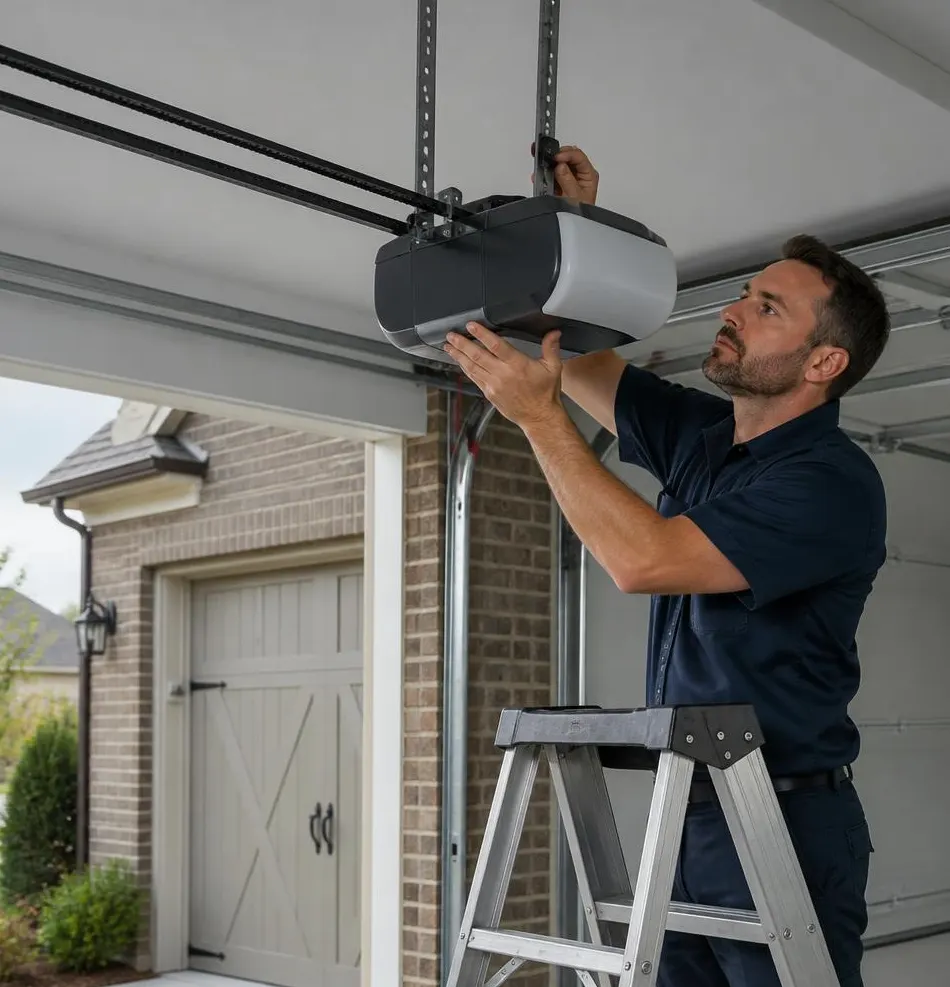
The Call We Get All the Time
A technician shows up because a door 'slams down too hard' or 'won't open all the way,' and within five minutes of popping off the opener's cover plate, the real story comes out: someone already turned the force dial up to make the door push through resistance. It happens constantly in homes around Springfield, Kingstowne, and the older streets near Alexandria, where houses were built decades apart and garage doors were added, replaced, or retrofitted at different times. One spouse says the door is broken. The other says they already 'fixed' it by cranking the force knob. Both are half right, and the argument usually ends the same way: the force was never the actual problem, and now it's masking one.
What Force and Travel Limits Actually Are
Force
The force setting tells the opener motor how much effort to use before it decides something is blocking the door and stops or reverses. Too little force, and the door won't fully open or close, especially in cold weather when grease thickens and tracks tighten. Too much force, and the opener will push through real obstructions, including a hand, a bike, or a pet, because it's been told to try harder no matter what.
Travel limits
Travel limits tell the opener exactly where 'fully open' and 'fully closed' stop. If the limits are off, the door might reverse a few inches before touching the floor, stop short of full open, or bang hard at the end of its run because the opener thinks it has farther to go than it does.
Why the Wrong Settings Cause Real Damage
These two settings work together, and when one is adjusted to cover for a different problem, the door pays for it over time.
- Force turned up too high often hides a worn roller, a track that's slightly bent, or springs that are losing tension. The opener compensates by shoving harder, which stresses the motor, strips plastic gears inside the unit, and puts extra load on cables and springs that are already weakening.
- Force turned up without fixing the real drag means the safety reversal system becomes less reliable. The door may not stop for an obstruction the way it's supposed to.
- Travel limits set wrong cause the door to slam the last few inches instead of settling gently, which jars the panels and hardware with every single use.
- Limits set too short leave the door not fully seated against the floor, which lets in cold air and water during heavy rain or winter storms.
How This Shows Up in Local Homes
Humid summers swell wood doors and wood jambs slightly, changing how much resistance the door meets at the end of its travel. Icy winters stiffen hardware and lubrication, so the door drags more getting started. If someone adjusts the force setting to compensate for a seasonal issue instead of the actual cause, the opener is left fighting a battle it was never built for once the weather shifts back. This is especially common in neighborhoods with a mix of older and newer construction, where original openers from an older installation are paired with doors that have since been replaced or adjusted.
How to Tell Your Settings Are Off
- Place a 2x4 flat on the ground where the door closes. If the door doesn't reverse immediately on contact, the force is too high and that's a safety issue, not a convenience one.
- Watch the door's last few inches of travel in both directions. Slamming or stopping short points to travel limit problems.
- Listen for straining or grinding from the opener motor during normal operation, a sign it's fighting resistance it shouldn't have to fight.
When to Call Alexandria Garage Door Solutions
If force or travel limits have been adjusted more than once to 'make it work,' it's time for an actual diagnosis instead of another dial turn. Our technicians check the door's balance, track alignment, and spring tension first, since those are usually the real cause, then set the opener's Opener Repair & Replacement settings to match a door that's actually moving the way it should. If the door itself needs attention, our Garage Door Repair service addresses the mechanical issue so the opener isn't doing a job it was never designed for.
If your opener's settings have been adjusted more than they should need to be, give Alexandria Garage Door Solutions a call and let's find out what the door is actually trying to tell you.