
That Frustrating Reverse: What's Going On?
You press the button on your garage door remote, the door starts its descent, and then — just before it reaches the floor — it stops and reverses back up. You try again. Same thing. Maybe it works on the third attempt, maybe it doesn't. Either way, you're standing in your driveway in Alexandria wondering what went wrong.
This is one of the most common garage door complaints we hear from homeowners, and the good news is that it's almost always fixable. The tricky part is that several different issues can cause the same symptom. Let's walk through the most likely culprits so you can understand what's happening and decide whether it's a quick DIY fix or something that needs professional attention.
The Safety Sensors Are Misaligned or Blocked
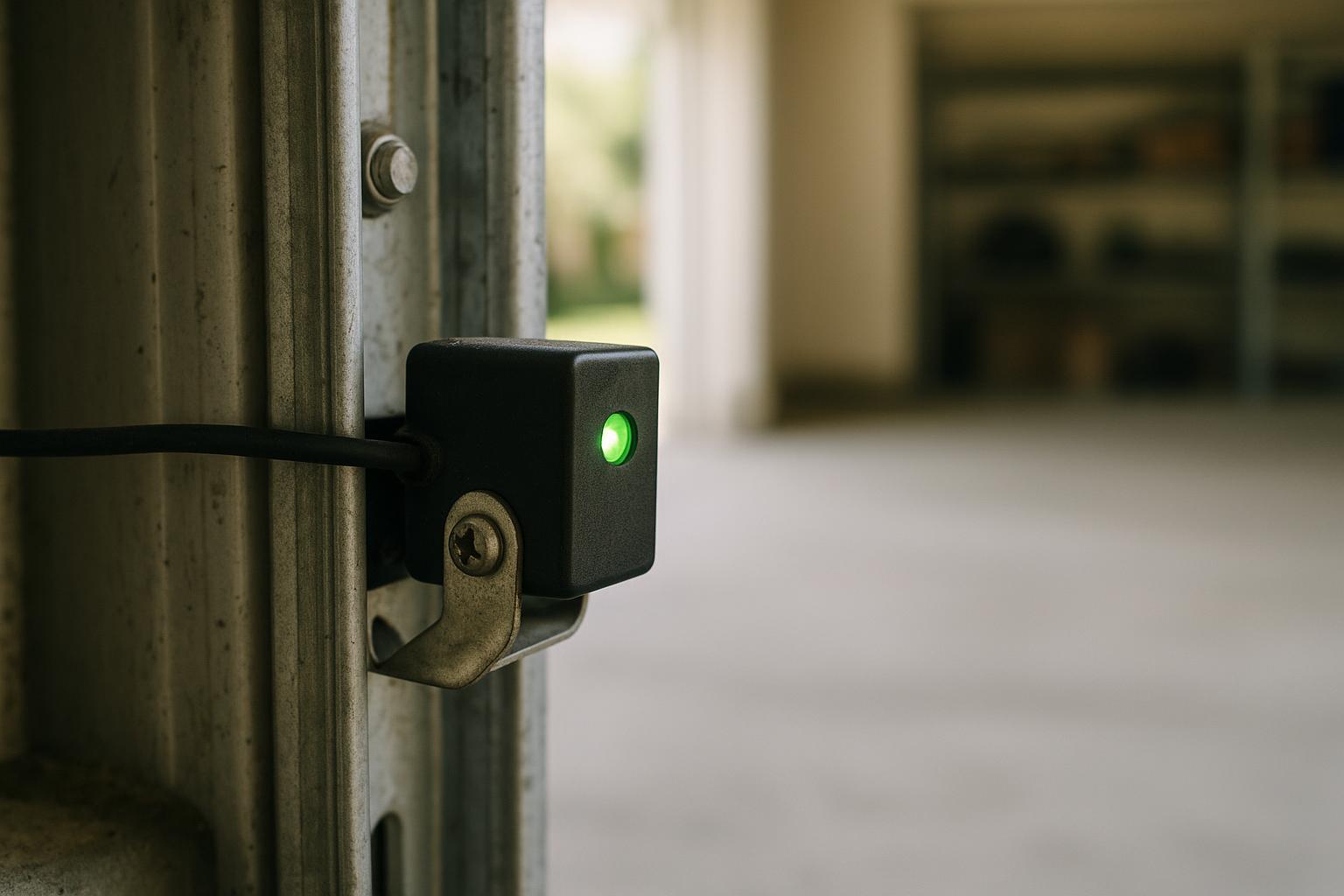
This is the number one reason garage doors reverse before closing completely. Every garage door opener manufactured after 1993 is required to have photo-eye safety sensors — two small devices mounted near the bottom of the door tracks on either side. They send an invisible beam across the opening, and if anything breaks that beam, the door reverses to prevent crushing a person, pet, or object.
Here's what to check:
- Look for obstructions. A broom handle, a shoe, a trash can, or even a pile of leaves can block the sensor beam. Clear anything near the sensors and try again.
- Check the sensor lights. Most sensors have small LED indicator lights. One should glow steady (the sending unit) and the other should also glow steady (the receiving unit). If one is blinking or off, the sensors aren't communicating properly.
- Clean the lenses. Dust, cobwebs, and moisture can cloud the sensor lenses over time. A soft cloth is usually all you need.
- Check the alignment. If a sensor has been bumped — maybe by a bike or a lawnmower — it may be pointing slightly off-angle. Gently adjust it until the indicator light turns steady.
Sensor issues are especially common in our area during fall and winter when condensation builds up on the lenses during cold Alexandria mornings. A quick wipe-down can save you a service call.
The Close-Force Setting Needs Adjustment
Your garage door opener has a setting that controls how much force it uses to close the door. If this setting is too low, the opener interprets normal resistance — like the weight of the door or slight friction in the tracks — as an obstruction and reverses as a safety precaution.
Most openers have a small adjustment dial or screw labeled "close force" or "down force." Turning it slightly (usually a quarter turn at a time) increases the force. However, be careful not to overdo it. Setting the force too high defeats the safety mechanism and could cause injury or damage. If you're unsure, this is a good time to call a technician.
The Travel Limits Are Set Incorrectly
Garage door openers also have travel limit settings that tell the motor how far the door should move in each direction. If the down-travel limit is set too short, the opener thinks the door has reached the floor before it actually has. When it senses continued resistance (because the door hasn't actually landed), it reverses.
Conversely, if the limit is set too far, the opener tries to push the door past the floor, meets resistance, and reverses. Either way, the fix involves adjusting the limit screws or reprogramming the settings on your opener. Your owner's manual will have specific instructions for your model.
Worn or Damaged Tracks and Rollers
Sometimes the problem isn't the opener at all — it's mechanical. Bent tracks, worn rollers, or debris in the track channels can create enough resistance during closing that the opener's safety system kicks in and reverses the door.
Walk along both tracks and look for:
- Visible dents or bends in the metal tracks
- Rollers that are cracked, chipped, or no longer spinning freely
- Dirt, gravel, or small objects lodged in the track
- Gaps between the track and the wall mounting brackets
If you spot bent tracks or severely worn rollers, this is a repair best left to professionals. The door is under significant tension, and working with tracks and hardware without proper tools and experience can be dangerous.
Broken or Weakening Springs
Your garage door springs do the heavy lifting — literally. They counterbalance the weight of the door so the opener motor doesn't have to do all the work. When springs weaken or break, the door becomes much heavier for the opener to move. The opener may struggle on the way down, sense excessive resistance, and reverse.
Signs of spring problems include:
- The door feels noticeably heavier when you lift it manually
- The door slams down quickly when disconnected from the opener
- You can see a visible gap in one of the torsion springs above the door
- You heard a loud bang from the garage (a common sign of a spring breaking)
Spring replacement is not a DIY job. These components are under extreme tension and can cause serious injury if handled incorrectly. If you suspect a spring issue, call a qualified garage door technician. Here in Alexandria and the surrounding communities like Springfield, Burke, and Kingstowne, we see spring failures year-round, but they tend to spike during temperature swings when the metal expands and contracts repeatedly.
Wiring Problems
Less common but still worth mentioning: damaged or loose wiring between the opener and the safety sensors can cause intermittent reversing. Rodents sometimes chew through sensor wires in garages, and connections can corrode over time, especially in garages that aren't climate-controlled. If you've checked everything else and the problem persists, faulty wiring may be the answer.
When to Call a Professional
Some of these fixes — cleaning sensors, clearing obstructions, minor limit adjustments — are perfectly reasonable for a handy homeowner to tackle. But if you've gone through the basics and your garage door is still reversing, or if the issue involves springs, tracks, or electrical components, it's time to bring in help.
At Alexandria Garage Door Solutions, we diagnose reversing problems every week. We'll identify the root cause, explain your options clearly, and get your door closing properly again — usually in a single visit. We serve homeowners throughout Alexandria, Annandale, Fairfax, and the surrounding area, and we always show up on time with the parts and tools to handle the most common repairs on the spot.
Don't Ignore a Reversing Door
A garage door that won't close all the way is more than an inconvenience. It's a security risk, an energy efficiency problem, and potentially a safety hazard. If your door has been acting up, address it sooner rather than later. The fix is often simpler and more affordable than you'd expect — and you'll sleep better knowing your garage is actually closed at night.
Have questions or need to schedule a repair? Give us a call or reach out through our website. We're happy to help.